Pages

October 28, 2025

You either face your demons, or they will raise your children


The Party on the Stairs (1875) by Adelaide Claxton
“A lot of people have kids. Not enough people are parents.” Ryan Holiday’s book The Daily Dad begins with a grim statement that captures the reality of parenting, which, to most parents, is more like checking boxes. Taking your kids to school, putting food on their table, buying them clothes, taking them to Disneyland, and buying them their favorite toys.

On an online forum, likely Reddit, someone who worked as a nanny for ten years and helped raise several children noted in a post that the most negative elements impacting a child generally come from - and are passed to them by - their parents’ unresolved trauma. And this is the part, she wrote, where she feels powerless while caring for a child. This is because resolving logistical issues is easy, but fixing the psychological and emotional issues that are results of being passed from their parents is extremely cumbersome - if not impossible - for others to do.

Regarding the unfulfilled desires of parents, unresolved issues, and emotional patterns that are unconsciously - and often consciously - passed between generations, particularly to children, Carl Jung famously said, "The greatest burden a child must bear is the unlived life of the parents.”

“Interpretation in terms of the parents is, however, simply a façon de parler. In reality the whole drama takes place in the individual’s own psyche, where the “parents” are not the parents at all but only their imagos: they are representations which have arisen from the conjunction of parental peculiarities with the individual disposition of the child”. - Jung, Symbols of Transformation (1912)

Going and Coming (1947) by Norman Rockwell  

Avoiding our insecurities, fears, and unhealthy patterns doesn't make them disappear. Instead, these issues unconsciously influence and control how we parent and relate to our children. Someone with unresolved issues linked to anger and aggression who has normalizing yelling and shouting will likely do the same with their children involuntarily and unconsciously. Similarly, a child with impulsivity and inattention may have been unconsciously influenced and “trained” by their parents to live that way.

As ideological polarization rises in the U.S., an obvious example of this "cognitive distortion" is parents holding orthodox and socially unhealthy views on race, region, sexuality, and politics, and unconsciously passing their beliefs to their children through the behaviors they exhibit and the remarks they make in their daily lives.

As the saying goes, children are like sponges. They absorb an enormous amount of information without much conscious effort. They absorb not only what they learn from their parents explicitly, but also their insecurities, fears, coping mechanisms, and blind spots. These learned patterns are how kids relate to and respond to the world, enabling dysfunction to be passed to the next generation.

The journey of a parent isn't just about the parent. In many ways, it’s as much about the children as it is about the parents. One of the goals of parenting should be to break the cycle and prevent unhealthy, painful patterns from reaching the next generation. You either face your demons, or they will raise your children.


October 03, 2025

Disruption


The idea of disruption can be thrilling for some, yet frightening for others.

A recent article by EY, titled 'What if disruption isn't the challenge, but the chance?', describes the current state of affairs in the world as the 'NAVI world'. NAVI is an acronym representing the four characteristics that distinguish the current situation from the pre-pandemic operating environment. Aimed at business leaders, the article details that we are living in a world in which change is increasingly nonlinear, accelerated, volatile, and interconnected.

The authors of the article outline two ways to succeed: transforming for agility in the near term and making no-regret moves in the long term. 

Disruption is not a mandatory aspect of innovation.

In his masterpiece, “The Structure of Scientific Revolutions”, Thomas Kuhn, one of the most prominent 20th-century philosophers of science, writes that successful new models frequently incorporate old ones. In order to create something new, it is not necessary to completely discard or break what we already have. He uses Newton and Einstein as examples, saying that Newton’s revolutionary ideas are still being used to build bridges and buildings, while Einstein’s are used to create GPS navigators, solar panels, laser beams, and self-lighting street lamps.

While successful disruptors in the 21st century may break old models, they build better ones that benefit us all. This is why we should embrace them rather than fear them.

Our readiness for innovation – and any accompanying disruption – is enhanced when we embrace change. The best way to accomplish this is to consistently expose yourself to different things, experiences, and adventures.

August 15, 2025

Spotlight


Narcissus, 1599, Caravaggio
In a society obsessed with social media and "main character energy" - famous politicians, religious figures, cult leaders, movie stars, celebrity athletes, social media influencers, et al. - visibility is often mistakenly seen as a synonym for value.

Those who lack the information and mental acuity to recognize the superficiality and insincerity of it all are led to believe that their contributions are insignificant and that they have no worth unless they are heard, seen, accepted, and acknowledged by others.

Telling ourselves that receiving attention is the path to fulfillment - whether in a corporate setting, family, or local community - is an unhealthy form of self-care and an ineffective way to contribute to a cause.

In our pursuit of authentic recognition, we often become less authentic. This happens when we place more trust in the arbitrary and often flawed judgments of strangers, shifting public opinion, and the whims of social media algorithms than in our own logic.

The most important and influential people in our lives are not those we see on TV, on stage, or on social media. They are also not the pretentious folks trying to convince us that their lives are perfect. Instead, they are the people who have helped shape our lives with their consistent and often selfless presence, which is anything but glamorous.

Fishing in Spring, the Pont de Clichy (Asnières), 1887, Vincent van Gogh


Lao Tzu, the author of the Tao Te Ching, a Chinese classic text central to religious and philosophical Taoism, stressed the importance of aligning oneself with the natural order of the universe. He discussed the concept of wu wei, which is the cultivation of a mental state in which one’s actions effortlessly align with life’s natural flow. 

Meditations, a timeless masterpiece by Roman emperor and Stoic philosopher Marcus Aurelius, was written for personal use only and not intended for publication. The book contains his private musings and has influenced people across the centuries. It is one of the most notable sources for studying and understanding ancient Stoic philosophy. Aurelius's most lasting contribution to humanity did not come from his position as emperor and the most influential figure of his time. Rather, it was the result of his contemplation of Stoicism during moments of solitude and seclusion, when no one was watching.

Similar to Socrates' dictum that "the unexamined life is not worth living," one should accept that life becomes easier in today's chaotic world by believing in and striving for true fulfillment, which does not come from being seen by many, but rather from "seeing" ourselves. This profound "seeing" occurs when we understand our values, act with integrity, and meaningfully contribute to the quiet rhythm of human existence.

July 01, 2025

Narrative Control

Edward Hopper, Soir Bleu, 1914

In an unhealthy society, facts, logic, and entire narratives can be reshaped by the majority or those in power to serve their predetermined goals. Power often requires no justification beyond its own existence.

The story of the lamb and the wolf illustrates a key truth about how the world often works. The wolf exemplifies the saying "might makes right" by fabricating reasons to eat the lamb, despite the fact that none of them make sense.

Facts don't care about feelings, but a wolf's hunger doesn't care about facts either. "The strong do what they can, and the weak suffer what they must." Despite the lamb’s rational responses to the wolf's accusations, the wolf was going to eat him simply because he could. The wolf doesn't care about being right; he just wants his dinner.

No matter how unfairly they act, those who are or think they are powerful will always find excuses to justify their actions.

They operate like a Wikipedia page written and edited by a group of people - confident and convinced that their version of events is the only one that matters. They believe they should be the ones controlling the narrative. When they do, they do so with the same questionable accuracy and deep conviction with which a toddler holds a crayon and colors outside the lines while claiming to follow the rules impeccably - and still being smug about it.

The majority does not always dictate the story, but they often have significant influence over how the narrative is shaped. The power to control the narrative should be constantly contested and evolve rather than remain permanently fixed in the hands of those in authority.

May 31, 2025

New Criticism

Engaging meaningfully with books and movies today requires a core competency in attentive and thoughtful reading. This involves grasping how metaphor, imagery, and structure interplay. 

New Criticism is a method of literary analysis that focuses on meticulous reading and thorough examination of texts. This approach has been utilized in celebrated pieces like T.S. Eliot's The Waste Land, the sonnets of Shakespeare, and Orson Welles's film Citizen Kane. While New Criticism was no longer the leading literary theory in Anglo-American literature by the 1970s, its approaches have proven to be crucial for the analysis of literature and cinema.

"Made in America," the series finale of The sopranos

The meaning of plots of The Sopranos is often analyzed through repetition and difference. The show almost always returns to similar situations: family dinners, therapy sessions (initially with Tony Soprano, then with his children, and occasionally with his therapist), and sit-downs of members of the mob. Food preparations and communal meals serve as a symbolic system of tradition and consumption, while Tony’s dream sequences show the viewers textual complexities of the story and also provide a psychological insight often requiring Freudian interpretation. 


In The Office, the documentary format of the show works as a catalyst for textual tension and offers a dramatic irony by showing the gap between how characters act in reality versus what they say on the camera. Paper - representing both obsolescence (risking replacement by digital media and tools) and permanence (a tool of permanent documentation) - is an ironic symbol of the show. It creates a meaningful tension between relevance and purpose of the characters’ struggles.

"Sunk Costs" episode of the third season of Better Call Saul

In Better Call Saul, Jimmy McGill's genuine care for people close to him and his manipulative nature and actions work as the central tension - something that generates fundamental paradox driving the whole point of the TV show. A student of New Criticism would see these impulses existing simultaneously within Jimmy throughout the show. Courtrooms are symbolic space, and legal documents like contracts and wills are recurring subjects - both representing a conflict between justice and manipulation. The ever-present reflection and mirror imagery in the form of bathroom mirrors, car windows, office glass, and fish tanks portrays the core theme of dual identity of both Jimmy/Saul and Kim.

In today's digital age, where attention spans are often fragmented, New Criticism's focus on immersive textual engagement feels particularly relevant. When online discussions often make literature seem like it is only about politics or the writer's life, looking at literature closely can show the creativity and depth that make it worth studying.

The relevance of New Criticism today lies in the fact that it tells us that prior to contextualizing a literary work, rendering it political, or personalizing it, one must first interpret it within its own terms - sentence by sentence, word by word, meticulously examining its distinctive formal merits.

April 07, 2025

Shake It Off

The Dancing Class, 1870, Edgar Degas

The work of a parent of young children is never done - it is just set to a different theme song. Call it a bittersweet victory or just a pivotal moment in every parent's life, the realization that your kids have evolved beyond the annoying hypnotic charm of Cocomelon comes with some complicated emotions. Do you celebrate or mourn? Part of me celebrated - that she is growing up, moving on developmentally to pick up on new songs that are more age-appropriate. Another part of me felt a pinch of sadness, as this marked the beginning of a series of instances where she would outgrow something that had played an important role for half of her formative years.

“Cocomelon is for babies, and I am not a baby anymore, daddy. I am a big kid now,” she said. An existence free of Cocomelon was like a parental lottery win. Then came Benson Boone, Taylor Swift, Dua Lipa, Post Malone, and so on.

She agreed with me that she wouldn’t watch Post Malone's "Rockstar" video song "because it has too much blood in it,” and she’d only listen to the audio version, as well as Malone’s “Sunflower” song that she found very catchy and loved. Dua Lipa's workout song "Physical" - with its choreographed dance sequences, bright colors, and visual references to the ‘80s fitness culture - became an instant hit for her, and she could imitate, albeit with childlike efficiency, every choreographed move Dua and other performers could do in the song. But it was Taylor Swift's highly acclaimed song "Shake It Off" that caught her attention, and she glued to the song for weeks.

And no wonder why Swift strikes such a chord with youths because of her personal songs that encompass young people's emotional struggles in relation to themes such as self-discovery, personal growth, first love, heartbreak, and friendship. A catchy pop anthem, "Shake It Off" is a reflection on individual identity and personal resilience and cherishing them.

A staunch follower of existentialism and stoicism would see the song as an expression of an existentialist philosophical position that defies societal norms and external criticism, as well as Stoicism’s tenet that dictates distinguishing and accepting things we can and cannot control.

The song embodies Jean-Paul Sartre's idea of radical freedom that talks both about the privilege and the burden of self-determination. “Man is condemned to be free,” Sartre said. We are responsible for our actions and choices, even though we did not choose to be born and/or to exist. There is no meaning to human existence.

By consciously choosing how to understand and respond to criticism, the protagonist of the song demonstrates an authentic way of being. She asserts her right to define herself rather than assimilate the unfavorable opinions of others. She also illustrates the Stoic idea of paying more attention to how you react on the inside than how you react on the outside. Marcus Aurelius, Roman emperor and Stoic philosopher, said, “You have power over your mind - not external events. Realize this, and you will find strength.” By turning criticism into a metaphor for controlling one's emotions and maintaining psychological independence, "Shake It Off" celebrates criticism.

Hard Being Me, 2020, Marcelina Amelia

Foucault, the French postmodernist, challenged the idea that power is exerted by a central authority. Rather, he saw power as distributed, dispersed, and pervasive. "Power is everywhere...because it comes from everywhere.” Foucault emphasized that through the new "humane" practices of "surveillance" and "discipline" used in new institutions, [French] society had reconfigured punishment. And by practices of discipline, he meant normative pressures related to gender, sexuality, and mental health (and health in general). “Shake It Off” questions these Foucauldian ideas of normative pressure and societal surveillance. The song celebrates a girl creating her own identity and narrative rather than allowing herself to be disciplined by others.

All musical compositions resonate with the shared, timeless experiences of humanity. From the elemental rhythms of ancient drums to the digital sounds of modern pop, music has forever chronicled the story of hearts that pound, feet that glide, and spirits that soar.

The basic elements of music are almost always consistent: rhythms echoing our heartbeats, harmonies capturing the depth of our feelings, and melodies aligned with the natural flow of language. They are all different, yet they are all the same because they all spring from the same well of emotion, human experience, and the need for connection through sound.


November 12, 2024

High Five: The Paradox of Time

Watching your child grow up causes time to bend in a strange way. Being a parent is the only thing that can make five years seem like an eternity, yet it also passes in a flash. Only being a parent can create this contradiction. I'm thinking about the essence of time as my kid approaches this milestone. At five, she's in the beautiful process of becoming. She's no longer a completely helpless baby, but not yet the confident child who will navigate the world more and more on her own. It's an in-between phase, a doorway separating two distinct stages of being. 

The Greeks spoke of chronos and kairos - chronological time versus the right moment. Her five years can be traced in chronos: 1,825 days, tons of diapers, first steps, first words. But it's the kairos moments that cut through the daily haze: her first real belly laugh, the day she called the moon beautiful, the morning during a car drive she said she really loved Taylor Swift. Five is the age of infinite questions, where "why" is both a greeting and an approach to life.   

Through her perspective, I'm reminded that wonder is not only the beginning of wisdom - it is wisdom. She approaches each day as a scientist, explorer, doctor, and artist - experimenting with slime, flashlights, toy medical kits, solving puzzles, building blocks, drawing and painting and signing her name on the paper, cherishing every visit to the local library, going on picnics in the woods with her binoculars and being intrigued by deer, snakes, rabbits, and people we’d encounter, and one day saying that our small-breed dog, Harper, would somehow grow up to be a “big dog someday, and then we’ll train her to be a smart dog.”  

As she turns five, I'm struck by the realization that being a parent means constantly living in the present while being pulled in different directions. We work hard to prepare her for an uncertain future, but at the same time we cling desperately to each fleeting moment. Perhaps this is what brings the most profound reality of parenting: it makes us time travelers. In our minds, we simultaneously inhabit our own childhood memories, our children's present, and the adult versions of ourselves they will eventually become. 

Five years old is a full hand of fingers, a galaxy of memories, a lifetime of love, all compressed into 1,825 individual days, each a complete cosmos in and of itself. 

March 31, 2023

Pandemic Journal-III

Weathering Heights

The winter – minus any major snowstorm and bone-chilling temperatures – was a bust. This year, it lived just in anticipation. We foresaw it coming, but it never actually arrived, like Samuel Beckett’s Godot. De-icer salt, snow boots, snow shovels, ice scrapers and snow brushes for cars were sparingly used. The local tri-state areas (areas surrounding New York City and Philadelphia metropolitan areas) likely experienced one of the warmest January in a century, with snowfall ranging from meager to barely existent, especially around Philadelphia.
January 2022

In Washington, D.C., cherry trees in the Tidal Basin – much like daffodils and tulips in the front yard of my house – are confused by the climate change, blossoming much earlier than expected due to unusually warm winter. As temperatures hovered in the sixties in Fahrenheit one day and in the twenties and thirties the other day, the winter this year acted, in some ways, like a hormonal teenager. It will not do what it is supposed to do, and it surely has no idea what is going on despite there is a lot going on.

With wildfires, extreme heat, drought, atmospheric rivers flooding, windstorm and snowstorm all affecting the state within a span of a year, California needs a special mention while we talk about weather extremes and the impact of climate change and how it is rapidly accelerating and compounding. Being one of the most biologically diverse regions of the earth, California has the highest number of flora and fauna of all other states in the United States. Weather extremes and ensuing climate change will not only negatively impact plant and wildlife habitats but also the ability of the state's ecosystems to support wildlife, clean water, timber, fish and other goods and services essential for the well-being of the state’s residents.

Voorhees, NJ. Summer, 2022.

Scientists and government agencies globally have suggested that the Earth is warming mainly due to human activity. Fossil fuels’ consumption has resulted in increased concentration of carbon dioxide in the atmosphere, which, as a result, blocks heat from escaping into space. We may already be too late in reversing the worst effects of climate change, but studies by NASA emphasize that some of the worst effects of climate change may still be avoided or at least curtailed by responding with a two-tier approach: 1) mitigation (decreasing the flow of greenhouse gasses into the atmosphere) and 2) adaptation (adapt to and learning to live with the climate change).


Itsy Bitsy Spider

If you are into Camus, there is no way the nursery rhyme Itsy Bitsy Spider does not remind you of the French philosopher’s essay Myth of Sisyphus. My daughter grew up listening to the nursery song – along with dozens of other rhymes, thanks to the highly addictive Cocomelon TV show – for around three years after being born, and her occasional humming of the song makes me wonder if whoever wrote the song wrote it as a response to Camus’s commentary on Sisyphus.

“The itsy bitsy spider crawled up the water spout.

Down came the rain, and washed the spider out.

Out came the sun, and dried up all the rain,

and the itsy bitsy spider went up the spout again.”


The spider’s adventure is a man’s journey, albeit Sisyphus’s. For Sisyphus, rolling the boulder for eternity, and for the spider crawling up the water spout, is a metaphor for our struggles – and the absurdity, in many ways – in our lives. Being the “wisest and most prudent of all mortals,” Sisyphus was also rebellious that led him to be condemned by the gods to an unending, hopeless, and futile task of rolling a large rock up a hill only to see it roll back down to the bottom of the hill after he reaches the top.

Camus concludes his essay, suggesting that we must imagine Sisyphus happy. “Each atom of that stone, each mineral flake of this mountain full of night, alone forms a world. The struggle itself to the heights is enough to fill a man's heart. One must imagine Sisyphus happy.”

Acknowledging and accepting our fate is the ultimate, absurd victory. For the spider, it is to see itself crawling up the water spout and being washed out by the rain over and over again. For Sisyphus, it is to relentlessly roll the boulder uphill only to see it later roll down and still concluding that everything is fine.

Baby Babble


Fall, 2022

Until a few weeks ago, many of her sentences used to start with “because.” “Because I want to watch my [TV] show.” “Because Karli is my best friend.” And “also” in a sentence will be “also too” to her, eg, “I love you also too,” “I want to go to Starbucks also too,” and “mommy is White. Daddy is Brown. I am Brown also too.”

Her new thing is joining a few sentences without a period, making them a funny, muddling mosaic of thoughts. “I don’t open the door when mommy and daddy don’t open the door to strangers I have to tell mommy and daddy there’s a stranger at the door.”

It is fascinating how kids – since the day they are born – are programmed to develop language and speech: from cooing, smile, laugh [and screams and cries, of course] and babbling to speaking their first word, putting a few words together, forming a sentence and later expressing their thoughts and feelings in relatively longer and complex conversations. The earliest five years are most crucial, while the language development continues well into adolescence.


Father's Day, 2022

Parenthood is uncharted territory, regardless of the parent’s age or the kid’s age. There are many questions, many answers, many styles of raising a child, many styles of not raising a child, many theories, many facts, many tittle-tattles. As an individual or as a couple or as a group raising a child, we gravitate toward ideas, values, and beliefs that resonate with who we are and what our fundamental beliefs about people and the society are.


COVID-19: The Way Ahead

There are a few known unknowns and a lot of unknown unknowns when it comes to knowing the origin of COVID-19 virus and how it remains a mystery four years into the pandemic. The questions and concerns linger about whether the virus originated in animals, or it was a result of a leak from a lab in China. Health analysts and experts say the exact origin of the virus may remain unknown for many years.
 

Philadelphia. Fall, 2022.

Conditions of the ongoing global crisis existed even before the COVID-19 pandemic began four years ago, but governments in many countries failed to safeguard their populations, while in many others, most notably in Asia, they were able to curtail the spread of the virus only by imposing draconian social restrictions. Virtually, in every nook and corner of the world, the pandemic altered or transformed routine life, instituting an epidemiological view of everyday lives.

With millions of people succumbing to COVID-19-linked illnesses, a swathe of issues unfolded during the pandemic and should be examined meticulously: quarantine urbanism, technological refusal to accept empirical evidence, conspiracy theories, anti-mask sentiment, troubling state of healthcare systems, and, importantly, a lack of government accountability and transparency, particularly in non-Western countries such as India and China. While deaths and infections from COVID-19 are still occurring every day, the worst is likely over.

So, where do we go from here? Should the new normal be the new old normal? Are we – as a global society – prepared for the next global crisis of similar or a bigger magnitude? With nations and societies being fragmented, can nations govern themselves differently [and more efficiently] – when the next crisis strikes – from how they did or have been doing during the COVID-19 pandemic?
 

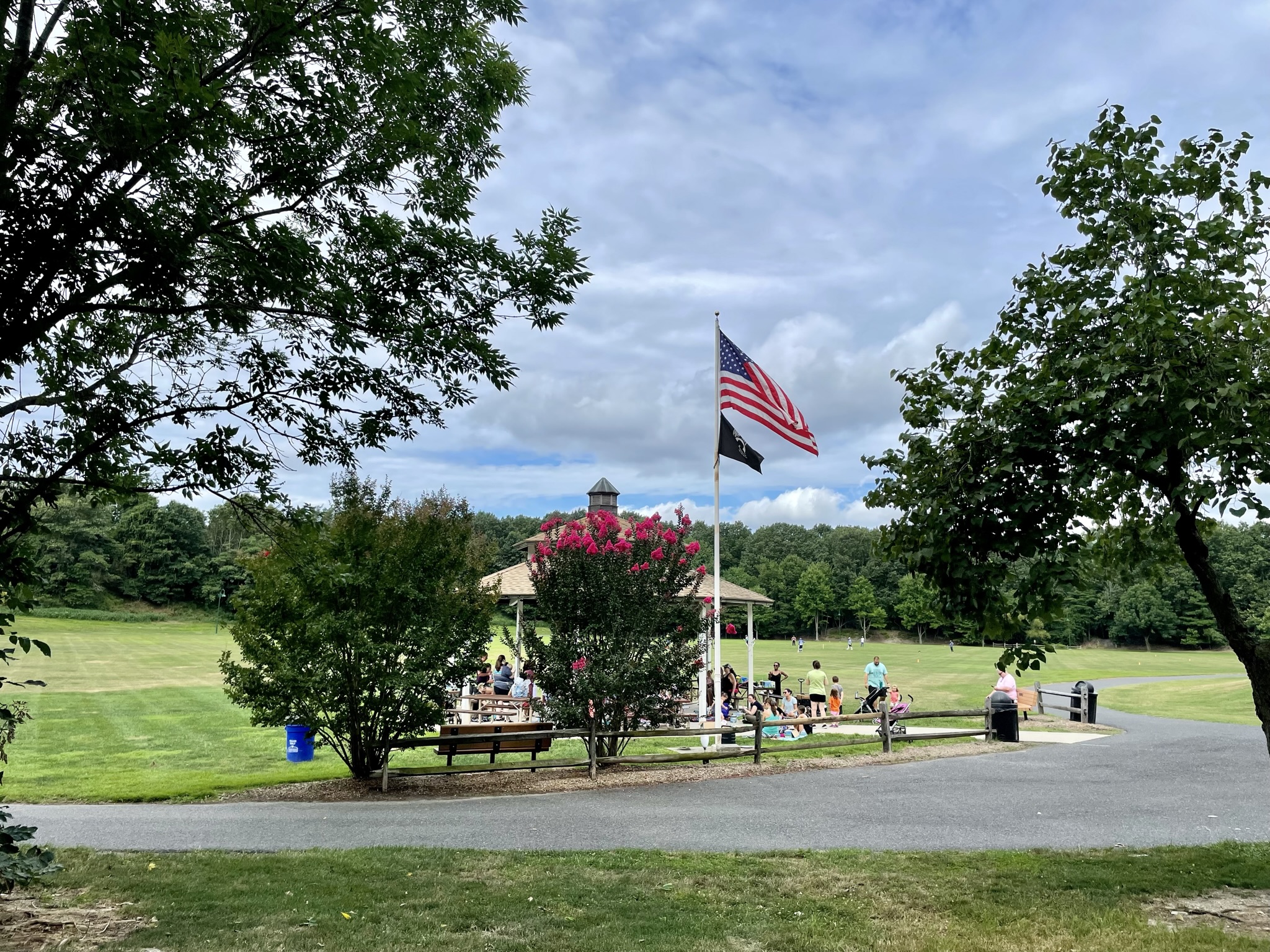
Connolly Park, Voorhees. Summer, 2022.

In his book The Revenge of the Real, Benjamin Bratton, an American sociological, media, and design theorist, argues that “instead of thinking of biotechnologies as something imposed on society, we must see them as essential to a politics of infrastructure, knowledge, and direct intervention. In this way, we can build a society based on a new rationality of inclusion, care, and prevention.”

A didactic attempt to see the whole pandemic in a positive light would be to accept that an individual, a society, or a nation grows stronger through failures. In the United States, where “American Individualism” has been a defining feature of public life for a couple of centuries, there is a need to not allow these revered individual rights and beliefs in self-reliance to become self-destructive selfishness. We can honor and celebrate personal liberty, and at the same time we can nurture a resilient community that promotes individual and community social, behavioral, and physical health to strengthen us to face challenges like a pandemic.
__

December 29, 2021

Pandemic Journal-II

Stories bring us together in turbulent times. As the COVID-19 pandemic continues to impact lives globally, every individual and every nation has its own narrative of how they endured. How China used its authoritarian power to control the virus. How older Europeans were disproportionately affected by the pandemic, with the majority of all deaths in Spain, for example, being those individuals aged 70 years and above. How hardships prompted by the pandemic forced thousands of women and transgender women into sex work in Mexico.     

In India, a series of draconian lockdowns imposed by the government at the beginning of the pandemic brought the rate of infection down, but only temporarily, and the cost of it was horrific on the country’s economy. With an almost entirely absent public health system there, the country descended into “COVID hell,” as hospitals ran out of oxygen cylinders for ill patients and dead bodies began piling up in morgues and crematoriums and often along river shores. Public health experts and international media estimate the number of COVID-19-related deaths during the pandemic in India could be around four-five million -- more than ten times the death toll of approximately 475,000 people reported by the Indian government.          

In Kenya, schools closed, and thousands of children went to work, many as prostitutes. As an investigation by Reuters reveals, COVID-19 unleashed “shadow pandemics” on girls in Africa. “With families unable to earn in lockdown, girls are married for a dowry or engage in transactional sex, exploited by neighbors, drivers or other locals – just to buy food.”  

Voorhees, NJ, winter 2020

In the United States, the death toll from COVID-19 has now soared above 800,000, which is more than half the population of Philadelphia, as well as the number of Americans who died of cancer in 2019. A continuing, wide-scale vaccination to counter the disease dramatically brought down infections and fatalities and helped the country to shed the virus gloom and at least enjoy a somewhat close-to-normal summer and fall this year.   

New variants of the virus continue to occur globally, with some spreading more easily than others, some being more severe than others and responding differently to treatments. Viruses, in some ways, are like us. They evolve over time, become stronger, and undergo various changes in their lives.  

The pandemic is far from being over yet. 


***


Orange day-lily, summer 2021

Psychologist Lawrence Kutner says toddlerhood is like a musical fugue in which “the themes of intellectual, physical, emotional, and social development intertwine.” The best thing that babies teach us is that the fundamentals of our lives are simple: laughter, cuddles, intimacy, learning, friendships, and spending time with a set of people who are nice to us. They are therapeutic and corrective at times, teaching us that they don’t care how fancy their birthday parties are going to be, how expensive the car we drive is, or even how expensive car seats or strollers we buy for them. 

Brimming with confidence, kids are eager to learn. As a parent, we seem to have learned a great deal about parenting since the child was born. But as confident as we become, thinking that we are really getting a hold of this parenting thing, something would happen every day to remind us that there is still a lot more to learn. How do you pacify a two-year-old baby throwing a tantrum and going boneless? How do you tell the baby to use gentle hands while petting the dogs and not throwing things on them because they are living beings and not animated, playful objects? How do you make her understand that putting her hand inside her friends’ mouth at the daycare [and getting bit] is not what she should be doing? How do you tell her how funny it is to demand to watch the same nursery rhymes and the same kids TV show every day for months?      

A positive consequence of the pandemic has been to allow families to spend more time together amid a slowdown in daily life (conversely, this has also led to a significant rise in divorce and break-up rates globally). My daughter and I created our own chores and rituals: taking the dogs to our house backyard, helping me feed the dogs, letting her help make myself espresso every morning, long drives over weekends, daily drive to her daycare, making her fruit smoothie and popsicles on occasions.          

Parenting is hard, very hard, but closely witnessing tremendous social, emotional, and intellectual changes that a toddler goes through after advancing from infancy is parenthood filled with transcendent moments.    


*** 

Keswick, VA, summer 2021 

Winding through Albemarle and Orange counties on Route 231 in Virginia this summer, when we finally managed to see and spend a few days with my wife’s grandparents in Keswick, was as much as a driving delight as the Pine Barrens, the largest Atlantic coastal pine barrens, close to the home in South Jersey. The drive to/through Keswick via Route 231, a two-lane country road, is one of the most scenic in America. As you drive, the scenic views alternate between enclosures of leafy green tree canopies and the sun-lit pastures of horse and sheep farms. I was reading in an article in the New York Times that very little has changed in the town since a century ago. Sitting in the foothills of the Blue Ridge Mountains, a few miles east of Charlottesville, the region is soaked in early American history, with much of the areas having been the site of plantations in Colonial days.             

The areas around Chatsworth in Woodland Township of Burlington County in New Jersey are full of ghost towns housing ramshackle factories from industries no longer surviving. Nestling in the Pine Barrens, they are prime examples of a Garden State industry that is still thriving — cranberry farming. A drive on Route 563 offers one-of-a-kind views of red masses bobbing on flat bogs. In normal times, there is an annual cranberry festival, one of the best and most interesting festivals in the Mid Atlantic, every fall. With hundreds of vendors, festival foods, live entertainment, an antique car show, and tens of thousands of visitors, the event is sort of a tribute to the Pine Barrens and local culture. The festival remains canceled for the last two years due to the pandemic.   

Not by traveling to some foreign lands – as we had hoped we would do last year and this year, but we did build some memories during our road trips that we took, on occasions, to see our family members, as well as during weekends with the baby and the dogs.      


***

An article published in the Harvard Gazette earlier this year points to the ongoing pandemic pushing mental health to the breaking point, with the young adults and the children being the most impacted and the effects likely being long-lasting. Prior to the pandemic, one in five Americans experienced some sort of mental illness; the number is now two in five. Michelle Williams, the dean of Harvard Chan School, says, “it will be months, if not years before we are fully able to grasp the scope of the mental health issues born out of this pandemic. Long after we’ve gained control of the virus, the mental health repercussions will likely continue to reverberate.”

Harper and Lizzie-I, summer 2020

Pandemic fatigue is real. So real. The World Health Organization describes the fatigue as “demotivated and exhausted with the demands of life” during the pandemic. And it affects us in so many unique, different ways. And one of the worst impacts of it is to lose boundaries of things we do every day. The boundaries vanish as we switch between dozens of tabs on our computers and mobile phones, streaming TV shows and podcasts, shopping online, responding to work emails, and attending daily household chores. The average American in 2018 spent more than 200 hours commuting. However, during the pandemic, as more people are working from home, they have been working three hours more daily than they did before. 

In a feature article titled “Living With Depression and Anxiety During a Global Pandemic” in the 5280 – a city magazine based in Denver, Colorado – Geoff Van Dyke, the editorial director of the magazine and the writer of the article, aptly sums up the pandemic fatigue, emotional exhaustion and the stress and monotony of staying home:  

“The darkness comes at night, or in the morning, or sometimes the late afternoon, in that liminal time between daytime and nighttime. It doesn’t discriminate. It doesn’t care that I have work to finish or that I should wash the dishes stacked in the sink or that I need to check in on how my two boys’ distance-learning schoolwork is going. It doesn’t care that, after seven months of mostly staying at home, I have already been examining the uglier recesses of my psyche.”


*** 

It is unlikely that the world after the pandemic will return to the world we saw prior to the pandemic. Numerous trends, with far-reaching consequences, impacting individuals, societies, and countries, are already under way, and one of the most notables is how the health crisis has changed businesses across the globe. 

The disruption led by the pandemic has wiped billions of dollars off the auto industry’s profits. Indoor dining in restaurants will likely not return to normal levels for at least a few years. COVID-19 has rapidly accelerated the growth of digital healthcare. In the education sector, while remote/online learning boomed during the pandemic, it has also augmented existing challenges related to inequalities, inclusion, and drop-out rates.

Pro-Trump graffiti, Route 70, NJ. Presidential election, December 2020
There are geopolitical implications involved as well. Ian Bremmer, an American author and political scientist, says that Coronavirus has accelerated three of the key geopolitical trends that will shape our next world order: deglobalization, the inevitable growth of nationalism and “my nation first” politics, and China’s geopolitical rise.    


***     

In a New Yorker article titled “Has the Pandemic Transformed the Office Forever?” published earlier in 2021, the writer John Seabrook asks an existential question: “What’s an office for? Is it a place for newbies to learn from experienced colleagues? A way for bosses to oversee shirkers? A platform for collaboration? A source of friends and social life? A respite from the family? A reason to leave the house? It turns out that work, which is what the office was supposed to be for, is possible to do from somewhere else.”   

It took a few decades and a spate of quiet revolutions to change the way offices are used – stamping out hierarchies of cubicles and walls and building them into team-based, open-plan layouts. However, technological advancements in office communications that brought in digital tools, such as emails, cloud computing systems, virtual team meetings, and video conferencing, which co-existed with offices in normal times, found a way to reach their prime exactly when the pandemic began, making a worker’s presence in offices less essential. 

While it’s true that digital technology cannot be a substitute for human connection, it’s also true that since the beginning of the pandemic millions of Americans have moved out of major cities and will likely not go back to offices. While companies, managers, and workers continue to struggle to figure out and reimagine what post-COVID-19 offices will look like, it appears that the pandemic may have already quickened the demise of offices. 


***

Choices made by individuals, societies, and nations during major crises, such as the ongoing COVID-19 pandemic, have the potential to shape the world for generations to come. What is critically important is us taking collective action to build societies and economies that bring inclusive and sustainable growth and prosperity for all.

August 13, 2020

Pandemic Journal

One way of telling the story of our daily lives in the coronavirus pandemic is to overlook any sense of normalcy and record everything that is missing or is in disarray: in-person meetings, driving to work, sitting next to colleagues in the office, going out without carrying face masks, dining out, gym, and plans to take my infant daughter to swimming lessons this summer, travel to Virginia and Connecticut to see my wife’s families, planning a family trip to Iceland this fall, and so on.

*

My wife and I used to watch Governor Phil Murphy’s press briefing on coronavirus every noon in the beginning weeks of the pandemic. In the early days of the pandemic, she even used to keep a daily record of new positive cases of the virus and confirmed virus-related deaths not just in New Jersey but also in the township and the county where we live.


Historic Smithville NJ, minus its touristic hustle and bustle, May 27, 2020

The first COVID-19-linked death in New Jersey occurred on March 10. The number of fatalities reported every day reached around 70 by the end of March and tripled within a week. By mid-April, more than 3,500 people died as a result of coronavirus in the small state of around nine million residents. It was around that time we stopped watching the official daily press briefing, weighing that there are more bleak weeks ahead for the state and its residents and that it would be better to use our lunchtime watching something worthy of entertainment rather than a similar sad narrative of deaths and pestilence every noon.

At the time of this writing, a total of 14,046 lives have been lost to coronavirus, with more than 185,000 positive cases of infections reported, in New Jersey alone.

*

The spring came and passed off without the world noticing it. The winter earlier this year was relatively less harsh, with the tri-state area – New York, New Jersey, and Connecticut – receiving much less snow than usual and making way for spring to quietly camp in. It was not just the appearance of the first bout of leaves on trees, the first crocuses peeking through the snow, and other signs of spring bloom being imminent, but the wholesomeness of spring as a season that we missed.


Meeting Ln, Evesham Township, NJ. March 19, 2020, the spring equinox.

By the time spring arrived in the Northern Hemisphere, coronavirus had America firmly in its grip. What followed spring was the furnace of summer, by then around five million Americans would be infected with the virus and one hundred and sixty thousands dead.

While the rest of the world has been on pause, daily life, in general, in America has not been hit as much as in other countries, particularly in Africa and Asia, where it is easier for governments to implement drastic movement restrictions for the public.

The number of infections and deaths has drastically decreased in New Jersey and neighboring New York but is rapidly swelling in much of the United States. With multidimensional losses, incurred by coronavirus, that fundamentally changed our lives, we are left to speculate when the virus is going to end. Will it be gone by the fall? Or maybe by the winter? Based on various current projections, there will likely be around three hundred thousand people dead because of the virus by the end of this year.

A sense of uncertainty pervades, with so much unclear.

*

“Actually, it would have been truer to say that by this time, mid-August, the plague had swallowed up everything and everyone. No longer were there individual destinies; only a collective destiny, made of plague and the emotions shared by all.”

~ Albert Camus, The Plague

I started reading Camus’ The Plague (La Peste, in French) in April, a few weeks into when New Jersey and New York, the erstwhile epicenter of coronavirus in the United States, were in the grip of coronavirus. The novel - set in Oran, French Algeria, in the 1940s, presenting Camus’ distinguishing absurdist point of view, seemed vehemently relevant even after eight decades. Every city in the world today is Oran, every country is Oran, the entire world is Oran.

Reading The Plague helps us understand that suffering is often not an individual difficulty but a shared experience, and that we should acknowledge the universality of suffering and turn it into something affirmative. In times like COVID-19 pandemic, suffering is universal, as Camus says in his book, “Everyone has inside it himself, this plague, because no one in the world, no one, is immune.”

The powerlessness of individual characters to control their destinies is the essence of absurdism. Camus advocated that identifying and understanding the absurdity of life should not lead us to hopelessness but to redemption, which aids us to soften our hearts and moralize thankfulness and joy.

*

Aside from human death toll, the economy has been the biggest casualty claimed by coronavirus.

The financial impact of the closure of local and transnational businesses, as well as of countries’ borders, has been immense. Most acutely felt is unemployment: labor statistics suggest more than thirty-three million Americans, out of total three hundred and thirty million people, have filed for unemployment benefits in recent weeks. In April, the unemployment rate in the United State rose to 14.7%, the highest since the Great Depression of the 1930s.


Ocean City boardwalk, NJ. May 16, 2020; beaches reopen after weeks of closure.

The system is built to make capitalism work. If you have money, the system helps you make more money. If one is broke, there are only limited ways in which one can find means to survive on, and the situation has exacerbated these days due to coronavirus.

Economists have also been calling it “a homelessness pandemic” given the grim estimation that around thirty million people in the United States are at risk of home evictions and foreclosures as a result of financial hardships triggered by the virus.

The economic situation is far bleaker in other parts of the world. A World Bank report published last week indicated that the COVID-19 pandemic is pushing between seventy-one and one hundred million people into extreme poverty.


The World Bank forecasts around 5.2% contraction in global GDP in 2020.

India, where several weeks of a historic and the world’s most stringent lockdown imposed by the government virtually shut the country’s economy, is one of the worst-hit countries by the virus. International Labor Organization projects that around 400 million people in India risk falling into poverty. The economic forecast for other developing economies, such as South Africa and Nigeria, and relatively poorer Sub-Saharan African countries look similarly dismal. Gulf nations are experiencing their worst economic crisis in history due to the double shock of plummeting oil prices and COVID-19. In Europe, where the UK, Spain, France, and Italy have been hit hard by the virus, many countries’ economies will need to be aided by rescue and recovery packages by international agencies and the European Union.

*

Despite all the pessimism surrounding coronavirus, there are ways in which we can all be positive and see some silver linings in the global crisis. What used to be a luxury hard-earned in days prior to COVID-19, family time is plentiful these days as people stay home and work from home during the pestilence.

As stated by Brad Wilcox, a professor of sociology and director of the National Marriage Project at the University of Virginia, “When society is facing a tremendous challenge or there’s a big uptick in suffering, people orient themselves in a less self-centered way and in a more family-centric way.”

My wife and I stopped sending our infant daughter to the daycare in late March, and that meant all of us would be staying home together for a few months to come.


Letter for my infant daughter from her teachers at the daycare

The baby, who will be ten months old in two weeks, has since gone through several development stages, witnessing which have been a sheer parental delight: rolling over, babbling, sitting up, giggling, teething, crawling, standing up on her own and cruising a few steps while holding onto furniture or someone’s hand, stringing words together and say “ma-ma”, “da-da”, “pa-pa”, and “ba-ba”. The baby’s absence from the daycare for a few months also allowed her to spend a great deal of time with her grandparents - my wife’s parents - and give us all opportunities to cultivate family togetherness.


They say there will be vaccines for the virus available by the end of this year or early next year. In an unprecedented effort, the United States has launched Operation Warp Speed that will help a large-scale public-private partnership to come up with vaccines for coronavirus in record time. Similar efforts are under way in other developed economies, including the United Kingdom and Germany.

We have vaccines for many infectious diseases – polio, hepatitis, diphtheria, rotavirus, influenza, varicella, et al. I often wonder how many of them have actually been eradicated. While vaccines will greatly reduce the coronavirus disease and ease the burden on hospitals swamped with coronavirus patients, there are fears and speculations by biologists and scientists that the virus will actually never go away.

The virus outbreaks will persist and the disease will emerge or reemerge, here and there. We will likely be living with this virus for the rest of our lives, as Albert Camus sums up in the final passage of The Plague:

“And, indeed, as he listened to the cries of joy rising from the town, Rieux [the central character of the book] remembered that such joy is always imperiled. He knew what those jubilant crowds did not know but could have learned from books: that the plague bacillus never dies or disappears for good; that it can lie dormant for years and years in furniture and linen-chests; that it bides its time in bedrooms, cellars, trunks, and bookshelves; and that perhaps the day would come when, for the bane and enlightening of men, it would rouse up its rats again and send them forth to die in a happy city.”

Human’s struggle against suffering is everlasting. This shared struggle - and shared humanity - is what kindles our acceptance in the value of optimism in times of hopelessness, and serves as an essential ingredient for a successful society.

March 28, 2020

Ethics in Time of Pandemic

There is a constant, unpredictable and everlasting warfare between humans and bacterium. This war occurs not just between human and bug, but actually also engages every living thing on earth, with each of us in a perpetual state of combat against countless bacteria, parasites and viruses.

In his new book, “Epidemics and Society: From the Black Death to the Present,” the historian Frank M. Snowden explores the effect of epidemic diseases and how mass infectious outbreaks have shaped our societies. Mass outbreak of diseases – such as smallpox, cholera, tuberculosis, HIV/AIDS, SARS, and Ebola – have not only influenced public health and medical science, but also transformed the history, warfare, arts, personal relationships and religion.

In a recent interview with the New Yorker, Snowden says, “epidemics like the coronavirus outbreak are a mirror for humanity, reflecting the moral relationships that people have toward one other.”

The Plague in Rome, 17th century. Museo Storico Nazionale Dell'Arte Sanitaria, Rome.

A pandemic raises several challenging ethical issues. According to The World Health Organization, these include: priority of access to healthcare resources with increased demand and possible shortages; obligations of healthcare workers in light of risks to their own health; and the fine balance between reducing disease spread through isolation and travel measures whilst protecting the right of individuals to freedom of movement.

As the US and large swathes of the world reel under the onslaught of the unabated COVID-19 pandemic since weeks, it reveals profound doubts about our preparedness for the next generation of diseases. It’s essential, and never late, to reflect on ethical concerns related to the planning, preparedness, and responses to pandemics.

Some of the vital steps that public health experts suggest we can take in order to respond to a pandemic include maintaining a focus on public health strategies that could be helpful in controlling the infection, providing affected countries with necessary infrastructure support, acting fast to treat infections and reduce their speed, and reviewing scientific and ethical standards for clinical trials for drugs and vaccines.

Equally important, but the hardest, step is to analytically examine the economic and sociopolitical conditions that create the circumstances for such disease outbreaks occur. 
             
Unless we face these structural problems and honestly consider and implement effective policies and strategies, the global problems such as coronavirus will be boundlessly repeated.

Lessons from a pandemic are instructive, but only if we are willing to learn from them. 

December 05, 2019

Known unknowns, unknown unknowns, unknown knowns

Is ignorance a thing of laughing at or lamenting the inanity and mental indolence of most of us, or a thing of identifying educational failures which could be remedied?    

Daniel R DeNicola, in his book Understanding Ignorance: The Surprising Impact of What We Don't Know (MIT Press, 2017), puts ignorance under three categories:

Known unknowns: what we know we don’t know
Unknown unknowns: what we don’t know, we don’t know
Unknown knowns: what we don’t know we know    

Most of us mistakenly see ignorance as just the absence of knowledge. Given that philosophical literature lays more emphasis on having broad discussion on knowledge than ignorance, we think the latter doesn’t warrant weighty philosophical attention.    

It’s philosophically difficult to explain accurately what ignorance is. Even if it is just the absence of knowledge, ignorance has a right for philosophical attention of its own in an expanded array of philosophical debates. 

September 20, 2019

Bring Our Birds Back

A research published recently by the journal Science suggests that the total breeding population of birds across the United States and Canada has declined by 29 per cent over the last five decades.

Grassland birds are specifically worst hit, with approximately 53 per cent contraction in their population - around 720 million birds. Shorebirds, which were already at precariously low numbers, have lost more than thirty per cent of their population.

The Magpie (1868) by Claude Monet
The findings indicated that of around 2.9 billion birds disappeared since 1970, ninety per cent belong to twelve bird families, including finches, sparrows, swallows, and warblers – widespread, common species that play important roles in food webs and the functioning of ecosystem, from seed dispersal to pest control. Habitat loss is believed to be among the driving factors in these declines of avifauna population.

However, Ken Rosenberg, an applied conservation scientist at the Cornell Lab of Ornithology and who is also the lead author of the research, has optimistic views about all this. He says, ‘Even if thirty per cent of North America’s birds are lost, there are still seventy per cent left to spur a recovery if conservation measures can be implemented. I don’t think any of these really major declines are hopeless at this point, but that may not be true ten years from now.’

The disappearance of almost three billion birds bespeaks an imminent crisis that we have the ability and means to stop. The need of the hour is to bring a societal shift in the significance and values we place on living alongside healthy and sustainable natural systems.

To begin with, we can do our bit by following some simple actions to help birds, as suggested by the #BringBirdsBack movement, which is spearheaded by various agencies and groups including American Bird Conservancy, Smithsonian, The Cornell Lab of Ornithology, and Georgetown University, which have all come together to create better protections and support for birds.  

August 24, 2019

A Silent Ecocide

Often referred to as Earth’s 'lung' because of its large swathe of forests releasing oxygen and storing carbon dioxide, the Amazon plays an instrumental role in processes that make our planet fit to live in.

The vastness and richness of the Amazon forest is such that a new species is discovered there every two or three days. Amazon expert and leading ecologist Thomas Lovejoy says, ‘every species in this incredibly biodiverse system represents solutions to a set of biological challenges — any one of which has transformative potential and could generate global human benefits. This rich wealth of species brims with promise, awaiting discovery.’

A forest fire in Para, Brazil | Photo courtesy: Victor Moriyama/AFP - Getty Images
The ongoing fires in the Amazon have provoked uproar among global leaders, celebrities, and social media users worldwide (#PrayForAmazonas has been one of the top trending topics on Twitter in recent days, as images of the fires spread across the internet). French President Emmanuel Macron has described the fires as ‘a real ecocide that is developing everywhere in the Amazon and not only in Brazil’.

The ravaging of Amazonia by fires or other forms of deforestation is not a new phenomenon. According to an estimate by the World Wildlife Fund, humans have cut down seventeen per cent of the Amazon forest cover over the last fifty years. Data released by from Brazilian satellites indicate that about three football fields' worth of Amazonian trees are falling every minute.

Debating whether the Amazon fires are a political problem or an environmental one will not help remedy the issue. According to reports, once lost, it will take around ten million years to replenish Amazon forest (the timeline is thirty-three times longer than humans, as a species, existed.

Deforestation and other environmental disasters are ecocides that are developing not just in the Amazon but in all other parts of the world. According to a report from the University of Maryland, the world in 2018 lost about thirty million acres of tree cover, including around nine million acres of rain forest, an area bigger than the size of Belgium. 

While identifying and acknowledging deforestation as a global problem by leaders, activists and the public has been easy, the tougher challenge is to implement the changes needed to rein it in, and that includes good governance, active participation of local populations and NGOs, and, most importantly, finding ways to prevent pervasive industrial deforestation.